

Houston Sellers Are Getting the Wrong Market Signal; Here’s What Buyers Are Actually Seeing
Houston Sellers Are Getting the Wrong Market Signal; Here’s What Buyers Are Actually Seeing
If you're selling a home in Houston right now, you may be looking at the headlines and thinking:
“Buyers have more choices, so I probably need to lower my price.”
But that's not necessarily the message today's market is sending.
Houston's housing market is changing, but the story isn't simply that buyers have taken control or that sellers need to start cutting prices.
The bigger story is that buyers have become much more selective.
They have more homes to compare. They have more time to think. They're paying closer attention to monthly payments, insurance, property taxes and condition. And when a home doesn't seem to justify its price, they're increasingly comfortable moving on to the next listing.
That's the market signal sellers need to understand.
According to the Houston Association of REALTORS®, August single-family home sales fell 11.5% year over year to 7,100 transactions. Active listings reached 38,947, inventory remained at 5.3 months and the median single-family price declined 1.5% to $330,000. At the same time, the average price increased 1.2% to $426,760.
Those numbers can sound negative if you only look at sales volume.
But buyers are seeing something different.
They're seeing choice.
And choice is changing what they expect from a home.
Buyers Aren't Just Looking at Your Listing Anymore
A few years ago, a buyer might have seen a home they liked and immediately started thinking about how quickly they needed to make an offer.
Today's buyer can behave very differently.
They may save your listing, compare it with five others, check the property taxes, estimate insurance, look at recent sales and schedule another showing before deciding whether your home is actually worth pursuing.
That's because inventory gives buyers something incredibly valuable:
time.
Houston had nearly 39,000 active single-family listings in August, with 5.3 months of inventory. Days on market increased from 52 days a year earlier to 54 days.
That doesn't mean buyers aren't interested.
It means they're less likely to feel forced into a decision.
And for sellers, that distinction matters.
The Buyer Doesn't Care What Your Home “Used to Be Worth”
One of the biggest mistakes sellers can make in a changing market is anchoring their expectations to the past.
Maybe your neighbour sold for $400,000 two years ago.
Maybe a similar home sold for $425,000 during the peak of the market.
Maybe you remember what homes in your neighbourhood were selling for in 2021 or 2022.
Your buyer doesn't necessarily care.
They're looking at what else they can buy today.
That is the competition that matters.
If a buyer can choose between your $425,000 home and another $425,000 home with a newer roof, updated finishes, lower projected maintenance costs and a more compelling presentation, the question becomes obvious:
Why should they choose yours?
That's where many sellers are getting the wrong market signal.
The issue isn't always that the market has suddenly decided their home is worth less.
The issue may be that the buyer's alternatives have become better.
Buyers Are Comparing More Than Price

Today's buyer isn't simply asking:
“What is the asking price?”
They're asking:
“What am I getting for that price?”
That means sellers need to think beyond the number on the MLS.
Buyers may compare:
-
Condition
-
Updates
-
Layout
-
Location
-
Property taxes
-
Insurance costs
-
HOA or MUD expenses
-
Age of the roof and HVAC
-
Outdoor space
-
Energy efficiency
-
New-construction alternatives
-
Estimated monthly payment
A home can be correctly priced and still struggle if the buyer doesn't perceive enough value.
That's an important distinction.
Price gets buyers' attention. Value gets them to stay interested.
The Monthly Payment Is Part of Your Competition
Houston sellers also need to remember that buyers aren't purchasing a listing price.
They're purchasing a monthly financial commitment.
Mortgage rates remained around the 6.7% range during August, with the average 30-year fixed rate cited by HAR at 6.67%.
That means a buyer may look at a $350,000 home very differently today than they would have when mortgage rates were significantly lower.
And the payment isn't just principal and interest.
Buyers may also be calculating:
Property taxes + homeowners insurance + HOA + MUD + maintenance + mortgage payment.
So when a buyer says:
“This house is too expensive."
They may not necessarily mean the listing price is unreasonable.
They may mean the total monthly cost doesn't feel justified by what the home offers.
That is something sellers need to understand before assuming the only solution is a price reduction.
Buyers Are Seeing Price Cuts Everywhere
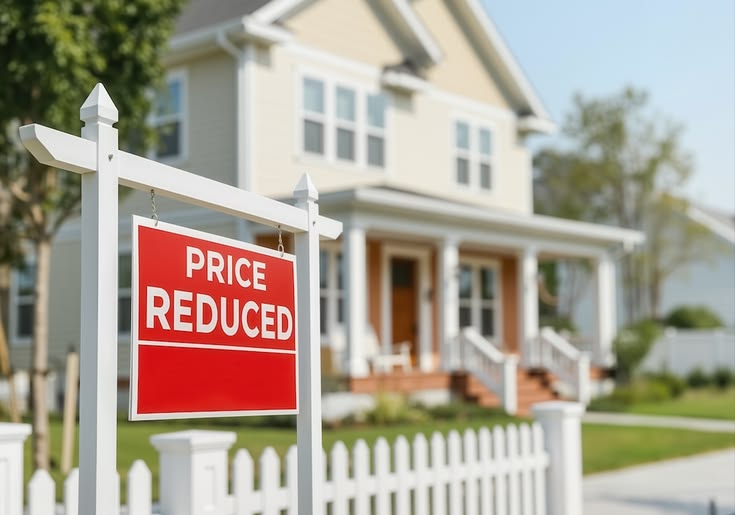
There is another psychological shift happening in the market.
Buyers are becoming accustomed to seeing price adjustments.
Realtor.com reported that 21.3% of Houston listings had a price reduction in August, while the median list price was $359,000, down 1.6% year over year. Houston homes had a median of 52 days on the market.
That creates an important buyer expectation:
“If I wait, maybe the seller will move.”
Not every buyer will think that way.
But when buyers repeatedly see price reductions across the market, they may become less willing to make a strong first offer simply because a home is attractive.
They may watch.
They may wait.
They may negotiate.
And they may move on if another seller provides better value.
For sellers, that makes the initial pricing strategy even more important.
The First Two Weeks Matter More Than Many Sellers Realise
When a home first hits the market, it gets a burst of attention.
Buyers who have been searching may immediately notice it.
Agents may schedule showings.
Online platforms distribute the listing.
Social media can create additional exposure.
But that attention doesn't last forever.
If buyers repeatedly see a property without taking action, the listing can begin to feel less urgent.
Then a seller may make a price adjustment.
But by that point, the property may already have accumulated additional days on the market.
That's why the goal shouldn't simply be:
“Let's list high and see what happens.”
The better question is:
“What price and presentation will make buyers stop comparing and actually schedule a showing?”
Your Home Is Competing With New Construction Too
This is particularly important for Houston-area sellers.
In some communities, a resale home isn't competing only against other resale homes.
It's competing against builders.
And builders can sometimes offer incentives that aren't immediately obvious from the headline price.
Rate buydowns, closing-cost assistance, upgrades or other incentives can change how a buyer evaluates a new home versus an existing one.
That means a resale seller may need to compete on more than square footage.
The home needs to communicate why buying this property today makes sense.
Maybe it's the established neighbourhood.
Maybe it's the mature landscaping.
Maybe it's the location.
Maybe it's the larger lot.
Maybe it's the finished backyard.
Maybe it's the absence of construction around the property.
Whatever the advantage is, buyers need to understand it.
Buyers Are Not Necessarily Looking for the Cheapest House
This is one of the biggest misconceptions sellers can have in a slower market.
A buyer isn't always searching for the lowest possible price.
They're searching for the strongest combination of price and value.
A $375,000 home can attract more attention than a $350,000 home if buyers believe the additional $25,000 delivers something meaningful.
Perhaps the more expensive home has:
A newer roof.
A better location.
A renovated kitchen.
A larger lot.
A better floor plan.
Lower expected maintenance.
Or simply a condition that allows the buyer to move in without immediately spending another $30,000.
That's why sellers shouldn't automatically assume:
“The house down the street is cheaper, so I have to match it.”
The better question is:
“What is the buyer getting from each property, and how does my home compare?”
The Houston Market Is Not One Big Market
Another signal sellers can misread is the idea that “Houston's market” is moving in one direction.
It isn't.
Conditions can vary by neighbourhood, price range, property type and location.
A home in one Houston-area community may attract strong interest, while a similar property in another area sits longer.
Entry-level properties can face different affordability pressures than higher-priced homes.
Resale properties can face different competition depending on how much new construction is available nearby.
Even two homes within the same ZIP code can perform differently based on condition, price, lot, updates and presentation.
That's why a citywide statistic should be the starting point, not the entire pricing strategy.
What Buyers Are Actually Looking For
So what does today's Houston buyer want?
The answer isn't simply “a lower price".
They want confidence.
They want to believe that the home they're considering is worth the money they're being asked to spend.
They want fewer surprises.
They want to understand their monthly costs.
They want the property to compare favourably against the alternatives.
And they want to feel that they're making a smart decision, not simply reacting to a listing.
That's why sellers should look at their home through the buyer's eyes.
Imagine your listing appearing next to five competing properties.
Would the photos immediately stand out?
Does the price make sense?
Does the description communicate meaningful value?
Does the home look move-in ready?
Are there obvious maintenance concerns?
Does the property offer something the competing listings don't?
If the answer isn't clear, that's where the marketing strategy needs work.
What Sellers Should Stop Doing
Today's market doesn't necessarily require panic.
But it does require sellers to avoid some outdated strategies.
Don't price your home based solely on what you need to net.
Your financial goal matters, but the market doesn't determine value based on your next purchase, payoff amount or personal circumstances.
Don't automatically use the highest nearby sale as your benchmark.
The most relevant comparable properties are those that compete for the same buyer today.
Don't assume more marketing can fix an unrealistic price.
Marketing can increase exposure.
It can't make buyers believe an overpriced home is a better value.
And perhaps most importantly:
Don't wait for the market to tell you what buyers are already telling you.
Showing activity, online engagement, feedback, competing listings and days on market can provide useful signals.
What Sellers Should Pay Attention To Instead
A better approach is to watch the market like a buyer.
Look at the homes buyers can choose instead of yours.
Look at recent comparable sales.
Look at active competition.
Look at price reductions.
Look at how quickly comparable homes are going under contract.
And pay attention to what happens after buyers see your home.
If people are viewing the property but nobody is making an offer, that's a signal worth investigating.
If you're getting very little showing activity, the issue could be price, presentation, marketing, location or some combination of factors.
If buyers consistently like the home but hesitate at the price, that's a different signal.
The goal is not to react emotionally.
It's to diagnose the market.
The Wrong Signal Is “Buyers Aren't Buying”
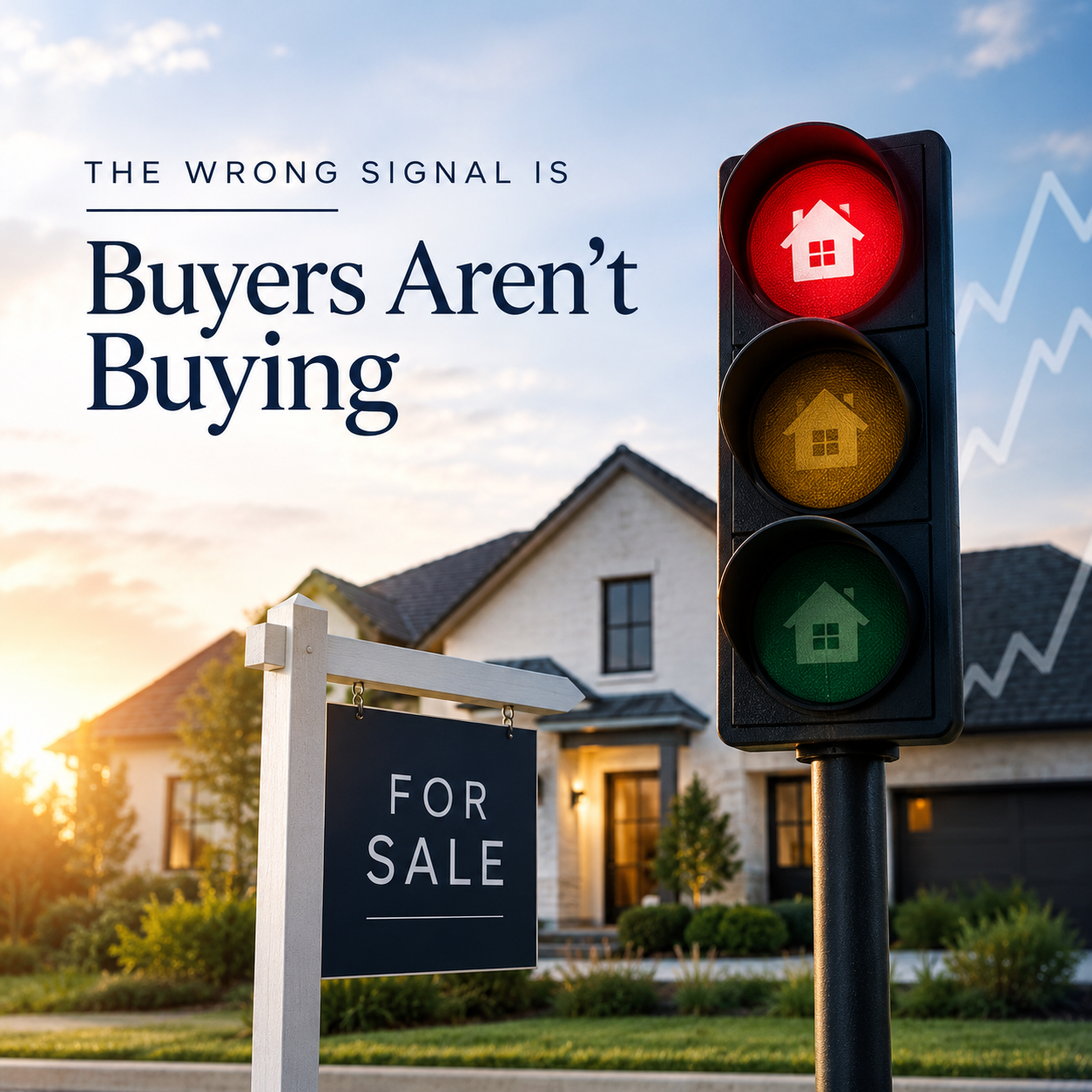
Houston's August numbers show that buyers are not closing at the same pace as last year. Single-family sales declined 11.5%, while pending sales fell 3.5%.
But that doesn't mean buyers have disappeared.
It means the decision-making process has changed.
Buyers have more choices.
They have more time.
They are paying closer attention to affordability.
And they're becoming more selective about where they put their money.
In fact, HAR reports that Houston affordability has improved year over year in 22 of the past 25 months, even as mortgage rates remain elevated.
So the market isn't telling sellers:
“Nobody wants your house.”
It's telling them:
“Give buyers a reason to choose it.”
The New Seller Strategy: Compete for the Buyer, Not Just the Sale
Selling successfully in today's Houston market starts with understanding that your home isn't being evaluated in isolation.
It is being compared.
Against the house down the street.
Against the updated home around the corner.
Against the new construction community ten minutes away.
Against the property that just reduced its price.
Against the home buyers saved on their phones last night.
That's your real competition.
And that's why successful selling today requires more than putting a sign in the yard and waiting.
It requires accurate pricing, strong presentation, strategic marketing and constant attention to what buyers are actually responding to.
Houston Sellers Don't Need to Panic. They Need to Pay Attention.
The current Houston housing market is more balanced than the frantic market many sellers remember.
Buyers have more choices.
Sellers still have opportunities.
Prices have not collapsed.
But buyers are asking tougher questions before committing.
That's the signal sellers shouldn't miss.
The question isn't:
“How do I convince buyers to pay the highest possible price?”
It's:
“How do I position my home so today's buyer sees enough value to choose it over the alternatives?”
That shift in thinking can change the entire selling strategy.
Your Home Isn't Selling in Yesterday's Market
Houston's housing market has changed.
The buyers haven't disappeared.
They've become more selective.
And when buyers have more options, the homes that stand out are the ones that give them a clear reason to act.
If you're considering selling a home in Houston, The Gonzalez Legacy Group can help you understand how your property compares with the competition, where buyers are looking and how to position your home for today's market, not the market from two years ago.
Thinking about selling? Let's look at the market through your buyer's eyes before you put your home on the market.
Categories
Recent Posts









Team Lead, Trusted Real Estate Advisor License ID: 0542785
+1(832) 766-0195 | elisa@gonzalezlegacygroup.com