A Data Center Is Coming Near Your Neighbourhood. Could It Change the Way Buyers See Your Home?
A Data Center Is Coming Near Your Neighbourhood. Could It Change the Way Buyers See Your Home?
Imagine preparing to sell your home when you hear that a large data center is planned just a few miles away. Suddenly, you have questions. Will buyers still be interested? Could the development affect your property's value? What about noise, electricity costs, water use or future construction?
These questions are becoming increasingly relevant across Texas, including communities around Greater Houston.
Data centers support the technology we use every day, from cloud storage to artificial intelligence. But as these facilities expand, their location is becoming another factor some homebuyers consider before making an offer.
So, does a nearby data center automatically make a home less desirable? Not necessarily. The real impact depends on the property, the development and the surrounding neighbourhood.
Why Are Data Centers Expanding Across Texas?
Texas has become an important destination for data center development because of its available land, energy infrastructure and growing technology industry.
According to a June 2026 investigation by The Texas Tribune, researchers identified at least 248 planned data center projects across the state.
The expansion is creating economic opportunities, including construction activity, investment and potential tax revenue. At the same time, communities are asking questions about how these large facilities could affect local resources and nearby residential areas.
For homeowners, this means a development that once seemed like a distant commercial project may become part of the conversation when evaluating a neighbourhood.
Could a Nearby Data Center Affect Your Home's Value?
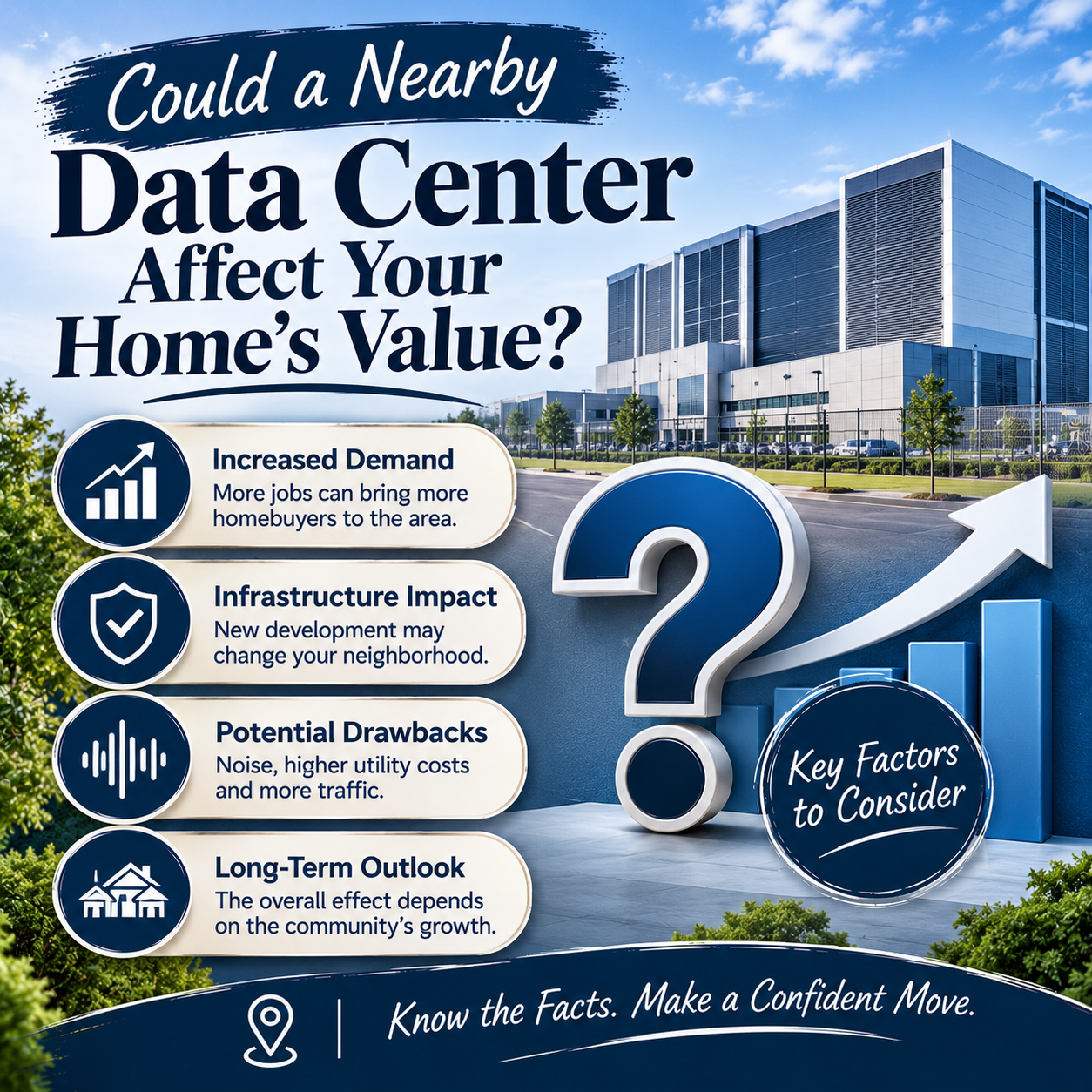
This is probably the biggest question for homeowners and potential sellers.
The research available in 2026 does not point to one universal outcome.
A September 2026 study by researchers affiliated with UC Berkeley and Harvard, titled Data Centers Lower Nearby Housing Values, estimated that large data center announcements were associated with an average 3% reduction in nearby home values within three miles over five years. The estimated effect was larger within one mile.
However, other research presents a different picture.
Realtor.com Economic Research found no measurable difference in home sale or listing prices during the first two years after large data centers opened in the communities it studied.
The National Association of REALTORS® also reported mixed industry perceptions. Some real estate professionals observed increased demand or property values near data centers, while others reported decreases or no noticeable change.
These studies use different locations, time periods and research methods. Some also exclude Texas because of limitations in publicly available home-sale data.
The takeaway: A data center nearby does not automatically determine what your home is worth. Its distance, visibility, surrounding infrastructure and the local housing market all deserve consideration.
What Could Make Buyers Hesitate?
Even if a data center does not directly affect a property's value, certain features of the development may influence how buyers feel about the location.
Noise: Cooling equipment, backup generators and other mechanical systems may create ongoing noise. Buyers may want to understand how close the facility is and whether sound barriers or other mitigation measures are planned.
Electricity costs: Large facilities require substantial electricity. Buyers may ask whether additional energy demand could influence local utility costs over time.
Water usage: Depending on the cooling system, some data centers require significant water resources. This can raise questions about local water availability and infrastructure.
Visual impact: Large industrial buildings, electrical substations, transmission lines and utility infrastructure may change the appearance of an otherwise residential area.
Future expansion: One proposed facility may not be the only development planned for nearby land. Buyers may want to know whether additional phases or related infrastructure are expected.
These concerns do not mean every nearby home will experience negative effects. They are simply factors worth investigating before making a real estate decision.
What Should Houston Homebuyers Check Before Making an Offer?
If you're considering a home near a proposed or operating data center, don't rely only on what you hear from neighbours or see in an online listing.
Take time to investigate the surrounding development.
Start by checking the property's distance from the facility and whether it has a direct view of the site. Look for nearby substations, transmission lines, access roads and other supporting infrastructure.
Review publicly available planning documents, development applications and local government meeting records. These may help you understand the project's proposed size, timeline and potential future phases.
If possible, visit the neighbourhood at different times of day. Pay attention to existing traffic, noise and surrounding land uses.
You should also review the property's local sales comparisons, flood-risk information and other location-specific factors. A home should be evaluated based on its complete surroundings, not just one nearby development.
What Should Homeowners Do If a Data Center Is Coming Nearby?
If you already own a home in an area where a data center is planned, there is no reason to assume you need to sell immediately.
Instead, stay informed about the project and understand how it may develop.
Follow local planning discussions, review official announcements and pay attention to changes in nearby infrastructure. If you eventually decide to sell, evaluate your property using recent comparable sales and actual buyer activity.
Avoid automatically reducing your asking price because a data center has been announced. Equally, don't assume the development will have no effect.
The most useful information comes from what buyers are actually willing to pay for comparable homes in your specific area.
Is a Data Center Always Bad News for a Neighbourhood?
Not necessarily.
Data centers can bring investment, construction activity, employment opportunities and tax revenue. However, the benefits and potential costs may be distributed differently across a community.
For some buyers, proximity to a data center may not matter much. Others may be more concerned about noise, utilities, industrial surroundings or future development.
That is why the impact needs to be evaluated locally rather than based on headlines or assumptions.
The Next Real Estate Question May Be What's Being Built Nearby
When buyers evaluate a home, they already consider schools, commute times, flood risk, nearby businesses and future neighbourhood development.
As data centers become more common across Texas, the surrounding infrastructure may become another part of that evaluation.
For Houston homeowners, the important thing is to understand what is being proposed, how close it is and whether there is measurable evidence of an effect on local property demand.
At The Gonzalez Legacy Group, we believe informed real estate decisions start with understanding more than the home itself. Whether you're buying, selling or evaluating a property's location, our team can help you navigate the Greater Houston market with a closer look at the factors that matter.
Thinking about buying or selling a home in Greater Houston? Contact The Gonzalez Legacy Group to discuss your real estate goals and make your next move with confidence.
Categories
Recent Posts







Team Lead, Trusted Real Estate Advisor License ID: 0542785
+1(832) 766-0195 | elisa.gonzalez@exprealty.com