

The Property Line Looks Clear Until Your Neighbour Disagrees
The Property Line Looks Clear Until Your Neighbour Disagrees
You find the perfect home in Houston. The backyard has plenty of space, the fence looks properly placed, and everything appears to belong exactly where it should.
Then your neighbour tells you that part of your fence is on their property.
Suddenly, a simple backyard becomes a potential legal and financial headache.
Property boundary disputes can arise over fences, trees, driveways, sheds or even a few feet of land. And what makes these disagreements complicated is that the visible boundary isn't always the legal one.
Before buying a home or making changes to your property, it's worth understanding where your land actually ends and what happens when your neighbour disagrees.
Does a Fence Really Mark Your Property Line?
Not necessarily.
A fence may have stood in the same place for years, but that doesn't automatically mean it marks the legal boundary. In Texas, property boundaries are generally determined through the property's legal description and relevant survey records, rather than simply by looking at an existing fence.
Texas A&M's Real Estate Research Center explains that physical features such as fences do not necessarily establish the property line.
This matters when you're buying a home. A backyard that appears spacious may include a fence positioned differently from the surveyed boundary. Likewise, a neighbour's landscaping or structure may extend beyond where the legal line lies.
Before relying on appearances, review the available survey and property documents.
How Small Boundary Disputes Become Expensive Problems
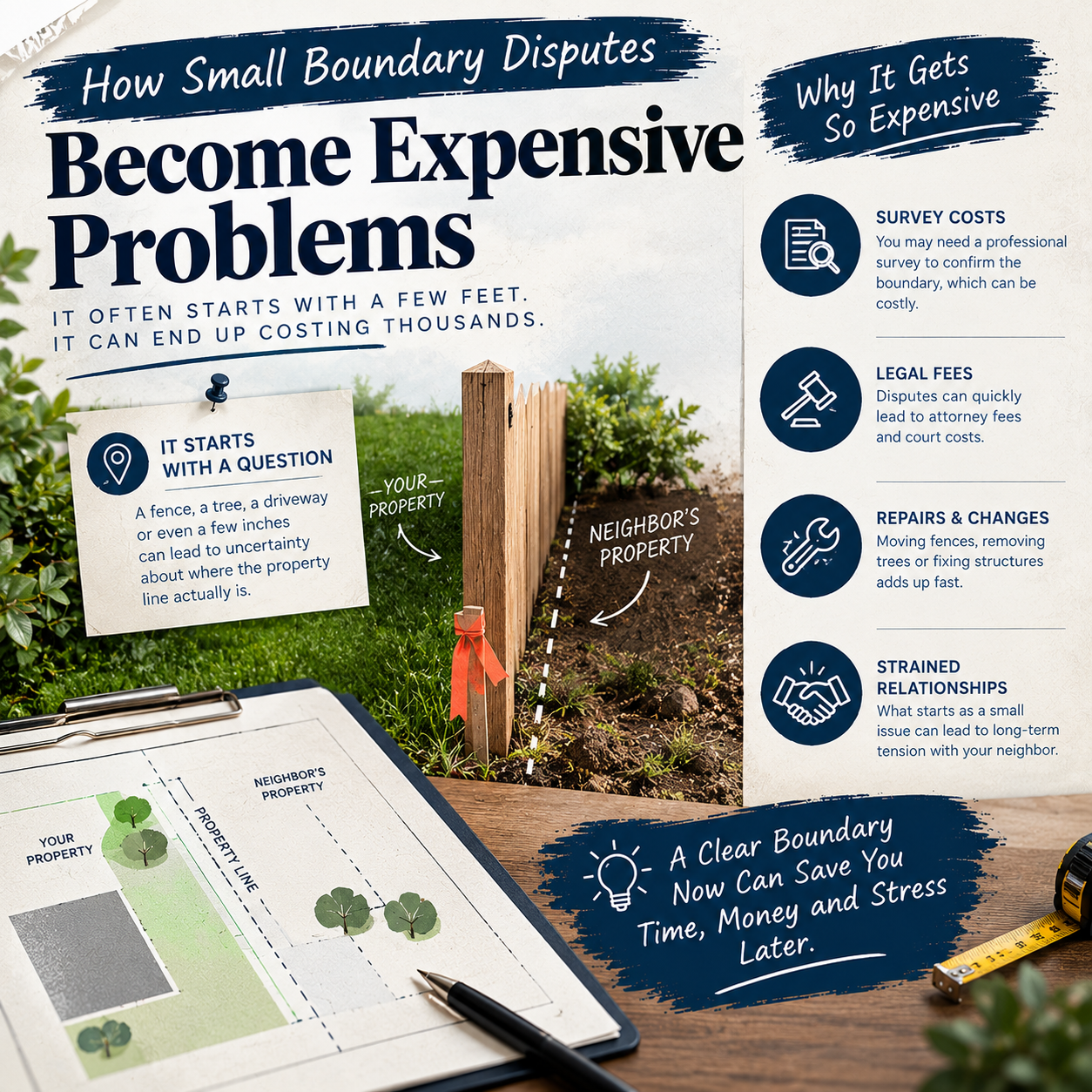
A disagreement over a few feet may seem minor until someone plans to build a fence, install a pool, extend a driveway or construct an outdoor structure.
Imagine you're planning a backyard renovation, but your neighbour claims the proposed work crosses onto their land. You may need to pause the project, obtain a professional survey and seek legal advice before moving forward.
Other disputes can involve tree branches, roots, drainage features or sheds that extend across a boundary.
Resolving the disagreement can mean additional costs, project delays and strained neighbour relationships. If the issue affects a future sale, it may also require attention during the transaction.
Why a Property Survey Matters Before You Buy
A property survey can help identify the boundaries and reveal potential issues that may not be obvious during a showing.
Before purchasing a Houston-area home, review the available survey and ask your real estate professional or title company whether an updated survey is needed for your transaction.
Pay attention to fences, detached structures, driveways and other features close to the property edges. If something appears inconsistent with the survey, seek clarification before closing rather than assuming it will be easy to resolve later.
Online parcel maps can be useful for general reference, but Harris County's appraisal information cautions that mapped parcel boundaries are approximate and should not replace a professional survey.
What If Your Neighbour Disagrees With the Survey?
Start by gathering the relevant documents, including your deed, survey and any available boundary agreements.
If the disagreement continues, consider having a qualified land surveyor review the boundary. Communicate calmly with your neighbour and avoid moving fences or structures until the issue is better understood.
Some disputes can be resolved through discussion or a properly documented written agreement. Others may require advice from a Texas real estate attorney.
The appropriate solution depends on the facts, documents and circumstances of the dispute. Don't assume that a fence's age or location automatically determines ownership.
What Houston Homebuyers Should Check Before Closing
Before finalising a home purchase, take time to understand the property's boundaries and identify anything that may need further review.
Confirm which survey documents are available, ask questions about visible encroachments and check whether planned improvements could be affected by property lines, easements or applicable restrictions.
If a boundary issue is identified, understand the options for addressing it before committing to the purchase.
A little investigation before closing may help you avoid a much bigger problem after moving in.
Protect Your Property Before a Disagreement Begins
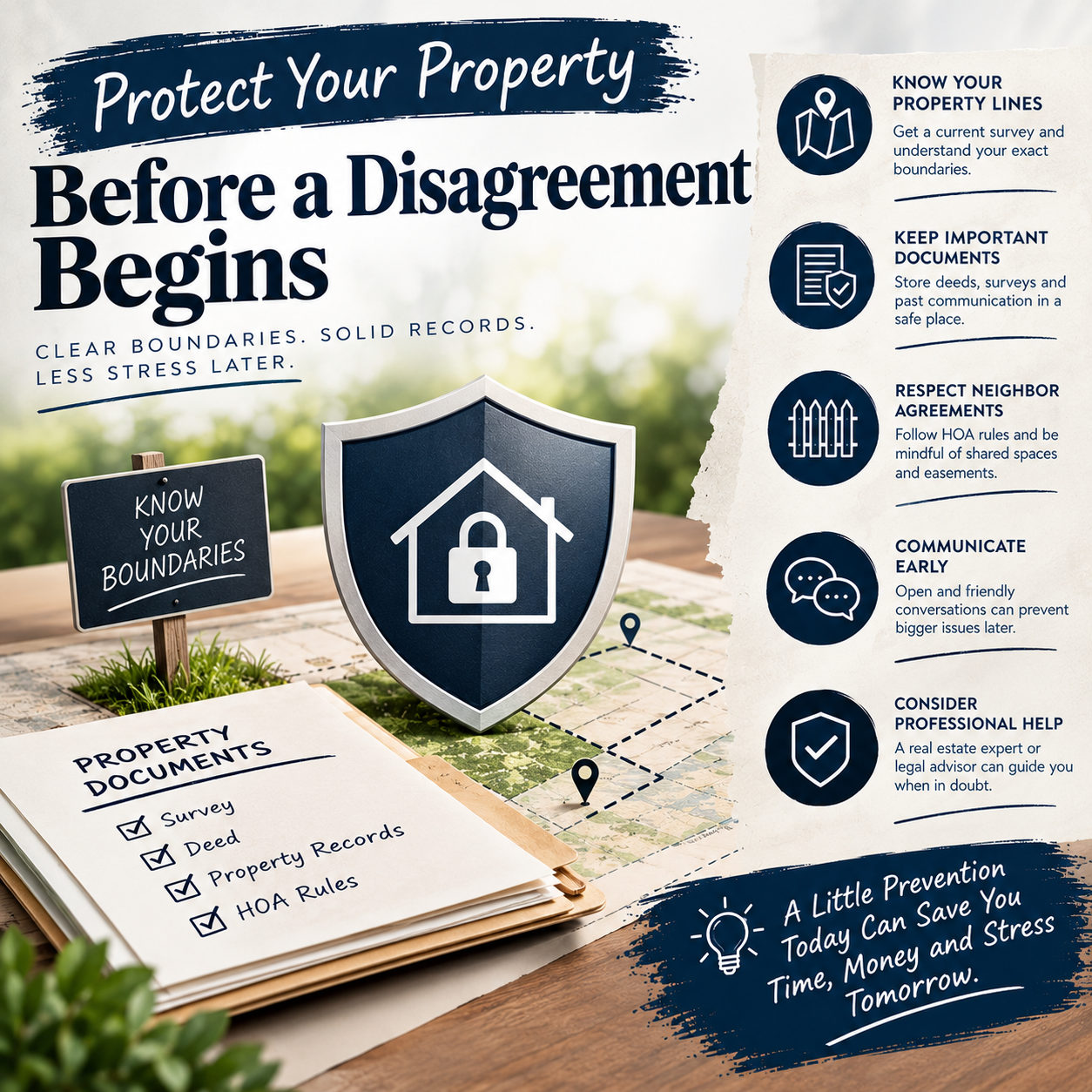
Property lines may be invisible, but their impact can be very real. A fence, tree or driveway that looks perfectly positioned can become a source of conflict if the legal boundary is unclear.
Whether you're buying a home, planning improvements or preparing to sell, understanding the property's boundaries is an important part of protecting your investment.
The Gonzalez Legacy Group helps Houston-area buyers and sellers navigate the real estate process with greater confidence. If you're preparing to purchase or sell a home, connect with our team to discuss the questions worth addressing before your next move.
This article provides general educational information, not legal advice. For a specific boundary dispute, consult a qualified Texas real estate attorney and, when appropriate, a licensed land surveyor.
Categories
Recent Posts










Team Lead, Trusted Real Estate Advisor License ID: 0542785
+1(832) 766-0195 | elisa.gonzalez@exprealty.com